On Friday, September 15, 2017, Paul McCartney welcomed Bruce Springsteen on stage. The two then ripped into the Beatles’ “I Saw Her Standing There.” McCartney performed at Madison Square Garden in the midst of a run of eight shows in four different locations in the New York area.
E Street Band member Steven Van Zandt also joined the pair on stage, providing a stellar guitar solo. McCartney had so much fun on the song, he then had everyone play “I Saw Her Standing There” a second time.
Below, check out Paul McCartney and Bruce Springsteen on the Beatles classic.
What Beatles song would you like Springsteen to sing with Paul McCartney? Leave your two cents in the comments.
Dion DiMucci remains one of the most underappreciated great early rock and rollers. Yes, everyone knows his work with the Belmonts and later on classic songs like “Runaround Sue.” But fans and critics often unjustly overlook other phases of Dion’s career.
Such is the case with his folk-rock work from the 1960s (as well as his blues music). Fortunately, Dion – Kickin’ Child 1965 Columbia Recordings — an album that would have been at the forefront of the folk-rock movement had it been released in 1965 when it was recorded in the Spring and Fall of that year — has finally been released.
The 15 songs on the album produced by Tom Wilson include ten written or co-written by Dion, as well as three Bob Dylan songs. One of the Dylan covers is a wonderful bluesy version of “Baby I’m in the Mood For You.”
Some of the songs would later appear on compilations, but the album never saw the light of day until now because Columbia refused to release it. Listening to the album now, it is impossible to understand that decision. But I am glad we can enjoy it now.
For example, one may easily imagine an alternate universe where the album was released in 1965. In that universe, “My Child” became a hit that forms the soundtrack of our memories of the 1960s.
Dion recently explained to Billboard how he left the record label after they refused to release Kickin’ Child. For decades, the experience gave Dion bad memories.
But when Dion recently listened to the remastered album, “The cloud lifted like vapor. It just lifted right out of my head. And I heard the music loud and clear like it was present to me. It wasn’t a novelty. It was rich. It was artistic, it was heartfelt. It was live. It was the real deal. And I said, ‘Man, this stuff is good.’ And I was proud of it.’”
One of my favorite tracks on the album is Dion’s cover of Tom Paxton’s “I Can’t Help But Wonder Where I’m Bound.”
The liner notes explain how Dion’s work at this time influenced others, even without the release of Kickin’ Child. For example, he suggested to Wilson to add an electric band to Bob Dylan’s “House of the Rising Sun” (Dylan loved it).
Critics are now giving the album some of the attention it should have received more than fifty years ago. For example, Allmusic understandably calls Kickin’ Child “absolutely one of the greatest folk-rock records ever.” American Songwriter gives the album four out of five stars.
Dion’s voice is in fine form. And the band from the Fall 1965 recording sessions — The Wanderers — has a great sound. The group included included The Belmonts’ Carlo Mastrangelo on drums.
Another standout track is “Knowing I Won’t Go Back There.” The song, written by Dion, previously appeared on the compilation album Road I’m On (another Dion album worth seeking out).
Kickin Child is a wonderful album, and anyone who loves music from the 1960s folk and folk-rock scene should definitely check it out.
Dion has mentioned that there exists other unreleased music from this era. So, hopefully there will be more coming as we continue to reassess the great career of Dion.
Tom Russell‘s upcoming album Folk Hotel features thirteen original songs and a cover of Bob Dylan’s “Just Like Tom Thumb’s Blues” as a duet with Joe Ely. One of my favorite albums of the last few years was Russell’s The Rose of Roscrae. So I’m looking forward to his latest work.
The album features one of Russell’s paintings on the cover. And one may also buy a lyric book featuring essays, lyrics, and additional paintings.
Uncut describes the new album as “folk-tinged songs about cowboys, Texas, Irish poets, and JFK.” A recent review on No Depression noted that the new album is “a very distinct shift of emphasis back to one man playing guitar and singing songs.” Heck, Russell even asserts it is his best album to date.
Below is Russell’s promotional video for Folk Hotel. Russell rambles around some stories and then there is a bit of music at the end. Check it out.
Folk Hotel hits stores and the Internet on September 8, 2017. Leave your two cents in the comments.
The number one song in the U.S. during much of the summer of 1969 painted a picture of a horrible future for humanity, “In the Year 2525 (Exordium & Terminus).”
During the summer of 1969, Zager and Evans dominated the radio with their hit song “In the Year 2525 (Exordium & Terminus).” The song stayed in the number one spot for six weeks, including during the Woodstock Music Festival and when Neil Armstrong walked on the moon. It hit number one on the Billboard Hot 100 on July 12, 1969, ending its run at number one on August 22, 1969.
The song catalogs a horrible future for humans, documenting the world in various rhyming years up to 9595. For example,
In the year 5555, Your arms hangin’ limp at your sides; Your legs got nothin’ to do; Some machine’s doin’ that for you.
Something about the song resonated with Americans (the song also did well in the U.K.). “In the Year 2525” seemed even more pessimistic than Barry McGuire’s 1965 hit “Eve of Destruction.”
Perhaps people related to the dystopian vision of “In the Year 2525” after the unrest of the previous year of 1968. That year saw the murders of Martin Luther King Jr. and Bobby Kennedy, Viet Nam protests, and other events. Or maybe having survived 1968, people found some joy in whistling past the graveyard.
The geniuses behind the song, however, would never match the success of “In the Year 2525.” Zager and Evans were Denny Zager and Rick Evans, who first had a regional hit with the song as local performers in Nebraska. Evans wrote “In the Year 2525” in 1964.
One of their followup songs, “Mr. Turnkey,” which was about a rapist, did not do well on the charts.
According to Wikipedia, Evans later recorded some of his own music but now stays out of the public eye, while Zager went on to build custom guitars for Zager Guitars.
If you are looking for some brand new quality country music to check out, look no further than Tyler Childers. The singer-songwriter released his first full album, Purgatory, on August 4, 2017.
On the new album, Childers has some help. Sturgill Simpson produced Purgatory, and David Ferguson, who was Johnny Cash’s engineer, helps out. But Childer’s songs and his voice speak for themselves on the autobiographical concept album that traces a young man’s growth into an adult.
Childers grew up in eastern Kentucky. And you may hear some of the Appalachian Mountains sound in his music. It’s great stuff, and he should be getting a lot more attention soon. Rolling Stone already has listed him as one of the 10 New Country Artists You Need to Know.
Because he is so good, he should get some help on the technology side so he can put up a website (his Twitter account currently has a link to a reverbnation page that isn’t there).
But it is the music that counts. One of the tracks on the album is “Whitehouse Road.” Check it out.
What do you think of Tyler Childers? Leave your two cents in the comments.
 On Friday, September 15, 2017, Paul McCartney welcomed Bruce Springsteen on stage. The two then ripped into the Beatles’ “I Saw Her Standing There.” McCartney performed at Madison Square Garden in the midst of a run of eight shows in four different locations in the New York area.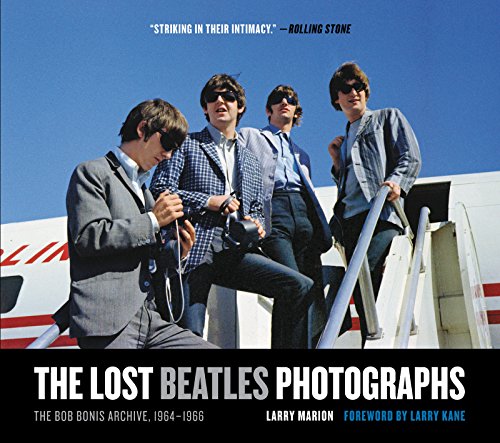

 — an album that would have been at the forefront of the folk-rock movement had it been released in 1965 when it was recorded in the Spring and Fall of that year — has finally been released.
 hits stores and the Internet on September 8, 2017.
 During the summer of 1969, Zager and Evans dominated the radio with their hit song “In the Year 2525 (Exordium & Terminus).” The song stayed in the number one spot for six weeks, including during the Woodstock Music Festival and when Neil Armstrong walked on the moon. It hit number one on the Billboard Hot 100 on July 12, 1969, ending its run at number one on
 If you are looking for some brand new quality country music to check out, look no further than
  , on August 4, 2017.