Bruce Springsteen Releases New Protest Song About ICE Protests: “Streets of Minneapolis”

Bruce Springsteen quickly responded to the killings by ICE in Minneapolis with the song, “Streets of Minneapolis.”

Like many Americans, Bruce Springsteen has been watching recent events and the deaths in Minnesota while people in Minneapolis continue to protest President Trump’s influx of ICE officers. In response, Springsteen very quickly wrote and recorded a song about the protests and the deaths of Renee Good and Alex Pretti.

Along with the song, Springsteen released the following statement:

I wrote this song on Saturday, recorded it yesterday and released it to you today in response to the state terror being visited on the city of Minneapolis. It’s dedicated to the people of Minneapolis, our innocent immigrant neighbors and in memory of Alex Pretti and Renee Good. Stay free, Bruce Springsteen

Of course, it is difficult to write a protest song so quickly and folks may debate whether they like the song as a song. And it is sure to draw the ire of Trump supporters. But either way one must hand it to an artist who recognizes their position and ability to put themselves out there for the less fortunate in spite of knowing many listeners will criticize him for taking a stand.

Oh our Minneapolis, I hear your voice,
Singing through the bloody mist;
We’ll take our stand for this land,
And the stranger in our midst;
Here in our home they killed and roamed,
In the winter of ’26;
We’ll remember the names of those who died,
On the streets of Minneapolis.

Update: Below is the official video for “Streets of Minneapolis,” directed by Thom Zimny.

Springsteen is not the only songwriter paying attention to the events in Minneapolis. Billy Bragg also wrote a protest song called, “City of Heroes.

Springsteen has often spoken out regarding Donald Trump. And “Streets of Minneapolis” is not Springsteen’s first statement on the ICE protests in Minnesota. Earlier in January at a concert, Springsteen dedicated a performance of “The Promised Land” to Renee Good, calling on ICE to leave Minneapolis: “If you believe you don’t deserve to be murdered for exercising your American right to protest; then send a message to this president.”

Leave your two cents in the comments.

9 Thoughts on the “Deliver Me from Nowhere” Movie and Springsteen’s “Nebraska” Box Set

Some thoughts from one fan on the film “Springsteen: Deliver Me from Nowhere” and the new box set of music “Nebraska ’82: Expanded Edition.”

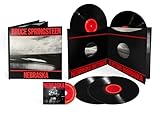
Bruce Springsteen’s 1982 album Nebraska has had a new moment in the sun with the release of a box album set Nebraska ’82: Expanded Edition as well as the release of the movie Springsteen: Deliver Me from Nowhere (2025). The film, about Springsteen’s personal turmoil during the making of the album, is based on the book Deliver Me from Nowhere: The Making of Bruce Springsteen’s Nebraska by Warren Haynes.

The film has received some good reviews and some mixed. But by most accounts it was a disappointment at the box office. There have been various explanations for the low attendance numbers. The explanations often center around the fact that the film does not have any major stars (despite a strong performance by Jeremy Allen White), it focuses on a narrow time period around one of Springsteen’s lesser-known albums, and the movie presents a depressing time in the artist’s life rather than a period of rousing successes. Some also have argued that Springsteen fans tend to be an older demographic, and that Springsteen has alienated some of his fans through his comments about Donald Trump.

I am a fan of Springsteen’s music. His work has been a major part of my life since before Nebraska was released. Since Nebraska, I’ve purchased every album he has released on the date each album was released. Further, from books and his interviews, I was familiar with much of the stories around his life. I also admire him for being open about his political beliefs even when it might have made economic sense for him to have been quiet while the movie was coming out.

So, if you are not a Springsteen fan, my opinion of the film may not connect with you. But for others who might be interested in the movie, should you see it — and if you are a fan of the album Nebraska, should you get the new box set? Here are 9 short thoughts from one Springsteen fan.

1. A fan may find it difficult to watch the portrayal of someone you “know” go through a dark period in their life struggling with depression. But if you have any interest in the man or the music, the movie gives you an interesting insight into the creative process and the turmoil of the man.

2. While one single moment does not break through in White’s performance, the movie’s portrayal of Springsteen’s depression reveals itself slowly, eventually making me feel on the verge of tears for much of the movie.

3. Don’t go to the movie looking for much about the E Street Band. Because the movie focuses on a period during the development of a solo album while Springsteen was not touring, there is not much interaction with the band. We do get to see Springsteen and the E Street Band in the studio working on some songs, including a successful recording of “Born in the USA.” Fans will recognize the portrayal of the various band members, but otherwise we do not get to see Springsteen hanging out with Clarence Clemons, Steven Van Zandt, or other band members. If you want more about Springsteen’s relationship with the band members during this period, check out Warren Haynes’s book.

4. The movie made me love Springsteen even more for his courage in participating in the book and the movie. The film shows him at a vulnerable time in his life where the portrayal is not always flattering. His willingness to show his struggles with depression is a gift for viewers.

5. The movie ends with a quiet personal triumph, but should it have been a larger triumph? Perhaps a different ending with him on stage during the subsequent Born in the USA tour performing an uplifting song like “No Surrender” would have made moviegoers happier as they left the theater, leading to bigger box office. Maybe it would have boosted box office. But I get that it might not have been as honest to the focus on Springsteen’s struggles, making it seem like all one needs to overcome depression is a hit song.

6. If you are a Springsteen fan, should you see the movie? Yes, of course, if you want more insight into a great artist.

7.If you are not a fan of Springsteen or his music, should you see the movie? Maybe, as long as you go into the movie realizing it is more about an artist’s struggle with depression than about an artist’s triumph or his hit songs.

8. The music: Does the movie give fans more insight into the songs on Nebraska? Yes, although I knew much of the story, like how the movie Badlands influenced the writing of the song “Nebraska,” the movie gave me additional insight. The scene where Springsteen changes the lyrics to “Nebraska” from third person to first person was an insightful moment for me, reinforcing how these songs are personal to Springsteen. While many of his songs are obviously personal, you get a better sense of why he fought so hard for these songs to be released as he originally recorded them rather than re-record them with the band.

9. The music: If you already have Nebraska the album, should you buy the box set, which includes an album of outtakes, an album of band versions of the songs (“Electric Nebraska”), a recent live recording of the album, and the original album remastered? Many music critics have noted that nothing in the box set improves upon the original album. But the outtakes and the songs that make up what has been called “Electric Nebraska” add additional insight and many of them are fun to listen to. I am glad he released the album he did in 1982. And I have heard many of the electric versions of the songs in live versions. Yet, on the new set I still loved some of the other versions (like the band version of “Reason to Believe”) and was surprised by others.

If you like the album, the box set is worth it. Or you can just stream the music, but give it a listen.

Leave your two cents in the comments.

Who Sings the Gospel Song “Last Mile of the Way” in the Film “Springsteen: Deliver Me from Nowhere”?

A key scene in “Springsteen: Deliver Me From Nowhere” features Bruce Springsteen and manager Jon Landau listening to a recording of “Last Mile of the Way” by The Soul Stirrers.

One of the interesting aspects of the movie Springsteen: Deliver Me from Nowhere (2025) is how it shows the close relationship between Bruce Springsteen, played by Jeremy Allen White, and his manager Jon Landau, played by Jeremy Strong. In one touching scene where Springsteen is at a low point, Landau says he has a song to play for Springsteen. He puts on “Last Mile of the Way” as the two men sit and Springsteen enjoys a rare quiet moment of comfort and peace.

Longtime Springsteen fans know about the role Landau has played in Springsteen’s life. First, as a rock critic he famously proclaimed Springsteen as the future of rock and roll: “I saw rock and roll future and its name is Bruce Springsteen. And on a night when I needed to feel young, he made me feel like I was hearing music for the very first time.”

But more importantly, in addition to eventually becoming Springsteen’s manager and co-producer, he also became a close friend that helped inspire Springsteen by sharing influences from music, literature, films, and elsewhere.

Deliver Me from Nowhere gives little background about Landau beyond the close relationship he has with Springsteen, always supporting his friend. It is a rare illustration of a close adult male friendship on screen. Landau is the opposite of the portrayal of Elvis Presley’s manager Colonel Tom Parker portrayed by Tom Hanks in the 2022 film Elvis. Landau’s and Springsteen’s close bond is highlighted in the moment they sit and listen to Sam Cooke singing “Last Mile of the Way” from when he was with the gospel group The Soul Stirrers.

Origins of “Last Mile of the Way”

While the song is a gospel tune, in the context of the film, a troubled or depressed soul might find inspiration to just keep going in the hope of better times ahead.

Johnson Oatman Jr.

When I’ve gone the last mile of the way,
I will rest at the close of the day,
And I know there are joys that await me
When I’ve gone the last mile of the way.

“Last Mile of the Way” is the oldest song in the Springsteen movie. Johnson Oatman, Jr., who lived from 1856-1922, wrote “Last Mile of the Way,” which was published in 1908. Oatman, like Springsteen, spent most of his life in New Jersey. From a young age he had a license to preach the Gospel and was ordained. Although sometimes serving as a local preacher, he had a more secular career too. For awhile he was in the mercantile business at Lumberton, N. J. And after his father died, he went into the life insurance business in Mt. Holly, N. J. (about 30 miles from where Springsteen would be born), where he lived with his wife and three children. Oatman also found time to write music, reportedly writing more than three thousand hymns, including “Last Mile of the Way.”

Sam Cooke & Bruce Springsteen

Before Sam Cooke became a pop star, he found success as part of the gospel group The Soul Stirrers. He served as the main lead singer of the group from 1950-1957. On August 17, 1955, Cooke and The Soul Stirrers recorded “Last Mile of the Way,” with arrangements by Cooke. It’s unclear to me whether the song was released while Cooke was alive, but the song would be released as a single in 1970 with “Must Jesus Bear The Cross Alone” as the B-side. This 1970 release features posthumous overdubs and appears to be the version played by Landau in Deliver Me From Nowhere.

Cooke, of course, would go on to find pop success with songs like “You Send Me,” “A Change Is Gonna Come,” “Another Saturday Night,” and “Twistin’ the Night Away.” Unlike Springsteen, Cooke died at a young age. He was 33 when he was shot and killed in a confusing violent act in 1964 around the time Springsteen would have been 15.

During his career, Springsteen has performed Sam Cooke’s songs such as “A Change Is Gonna Come” and “Another Saturday Night.” Also, Cooke’s “Mary’s Place” may have inspired Springsteen’s “Meet Me at Mary’s Place” from The Rising album. Springsteen has also jokingly referred to Cooke as “the other sexiest man that ever lived,” while he has also praised Cooke’s work with The Soul Stirrers. He has referred to Cooke’s “miraculous voice” during that era, “when he was at his most youthful, and maybe at his best.”

The music Cooke made with The Soul Stirrers of course lives on and still can provide solace and comfort for those who find it in the music, as illustrated in Deliver Me from Nowhere.

Bonus Another Key Non-Springsteen Song in Deliver Me from Nowhere: The soundtrack for Deliver Me from Nowhere features some other non-Springsteen songs, often playing in the background. Another one that stands out is Suicide’s “Frankie Teardrop,” which Springsteen listens to in his rented house while lying on the floor. As recounted in the book that is the source for the movie, Warren Zanes’ Deliver Me from Nowhere, Springsteen was a fan and early supporter of the band Suicide and lead singer Alan Vega. “Frankie Teardrop,” which appeared on Suicide’s first album in 1977, clocks in at over ten minutes and is about a troubled factory worker who murders his family and then commits suicide.

\Leave your two cents in the comments.
“Under a Big Sky”: Digesting Songs on Springsteen’s “Tracks II: The Lost Albums”

One of the highlights on Bruce Springsteen’s “Tracks II: The Lost Albums” is the heartbreaking country ballad “Under a Big Sky.”

For many Bruce Springsteen fans, the release of Tracks II: The Lost Albums is a bit overwhelming. For someone who is used to taking time for new Springsteen albums with repeated plays while reading lyrics, the release of seven “albums” from different time periods all at once requires a more varied approach. So in that vein, instead of reviewing the whole set or even tackling the release one album at at time (done very nicely by N.J. Arts.Net and also with short early reviews of each album –and album covers — by Pete Chianca of Blogness on the Edge of Town), I’m right now focusing on single songs like “Under a Big Sky” here.

Below is “Under a Big Sky,” which appears on the “country” album, Somewhere North of Nashville. Springsteen recorded “Under a Big Sky” during the summer of 1995 when he was working on country songs during separate sessions at the same time he was creating The Ghost of Tom Joad. While he has explained that these alternative sessions were an avenue for an escape from the darker songs that ended up on The Ghost of Tom Joad, the song “Under a Big Sky” is pretty sad.

The singer in “Under a Big Sky” has left his home for reasons he does not fully explain, noting he cannot return (“I don’t know why”). But later in the song he recalls being asked why he left and thinking, “But I had it set in my head / Believed every word the newspaper said.” And so he ended up somewhere out West, maybe following a newspaper ad for work. He apparently works on a cattle ranch, riding the line and catching strays while missing the woman he left behind.

“Under a Big Sky” may be the most country song on the “country” lost album, which also features some more energetic songs, including three with “man” in their titles (“Delivery Man,” Repo Man,” “Detail Man”). So “Under a Big Sky” stands out for me on the Tracks II set, capturing a sound similar to Springsteen’s “Wreck on the Highway” from The River.

I also found some thematic similarities to my favorite track on Springsteen’s 2019 album Western Stars, “Chasin’ Wild Horses.” In fact, the narrator in both songs might even be the same character, filling in more details of the narrator’s biography. Both narrators are doing hard work out West, missing a love left behind like a cowboy in an old Western movie. Heartbreaking but beautiful. Check it out.

What are some of your favorite tracks on the Tracks II: Lost Albums release? Leave your two cents in the comments.

The Stanley Brothers, Bruce Springsteen, and “Rank Strangers to Me” in Our Modern Times

The famous Stanley Brothers song “Rank Strangers to Me” has a mysterious meaning that inspired Bruce Springsteen writing about the alienation of modern politics.

I wandered again,
To my home in the mountains,
Where in youth’s early dawn,
I was happy and free.
I look for my friends,
But I never could find ’em.
I found they were all
Rank strangers to me.

According to Ralph Stanley’s autobiography, in the 1950s the Stanley Brothers were on their way to a performance, driving on a Sunday through Bristol, Virginia. Listening to the radio, they heard the song, “Rank Stranger to Me.” The song, performed by the Willow Branch Quartet, immediately grabbed Ralph and his brother Carter Stanley.

In “Rank Strangers to Me” (sometimes referred to as “Rank Stranger”) the singer recounts visiting their old hometown. But as they go through the town, they do not recognize anyone and all of the people are complete (“rank”) strangers.

“The song was all about feeling a stranger in this world, even with your own family and friends and neighbors, and how the next world would make all that right,” explained Stanley. The brothers soon added the song to their act, shortening their recorded version of the song to fit on a 45 rpm record.

Initially released as a single, the song then appeared on the Stanley Brothers album Sacred Songs of the Hills. Ralph later noted that “it became the most popular song the Stanley Brothers ever sung.”

The Willow Branch Quartet was based in Bristol and included Wilda Dillon singing lead and her mother, Ettie Dillon, singing alto. As others have noted, Wilda’s soprano lead singing gave the group a unique sound along with the harmonies of a family singing together.

According to Wilda’s son Gary Combs, the group had found the song in the Stamps-Baxter gospel songbook.

 Albert E. Brumley, who lived in Missouri and wrote “I’ll Fly Away” and other songs, wrote “Rank Strangers to Me” in 1942. After the Stanley Brothers recorded their version of “Rank Strangers to Me,” a number of artists continued to cover the song, including Porter Wagoner, Freakwater, Doc Watson, Ricky Skaggs, and Crooked Still. Bob Dylan included the song on his 1988 album Down in the Groove.

Brumley, who was born in 1905 and passed away on November 15, 1977, lived to see many of his songs, including “Rank Strangers to Me,” become classics.

One may wonder too whether “Rank Strangers to Me” may have inspired a similarly themed song written by Percy Mayfield, “Stranger in My Hometown.” That song reflects the flip side of “Rank Strangers to Me,” with the singer feeling like the stranger back in their hometown. Elvis Presley recorded “Stranger in My Hometown” in 1969, releasing it on Elvis Back in Memphis.

The Meaning of Rank Strangers

“Rank Strangers to Me,” like a good episode of The Twilight Zone, can haunt you. The idea of returning to a place where you should feel at home but discovering that everyone is a stranger has a supernatural element to it. One may wonder what meaning Brumley was trying to convey with the song.

Because Brumley wrote the song as a hymn, there is a good reason to assume that Ralph Stanley’s initial impression of the song is correct, that it has a religious connotation. We are all strangers in the earthly world, only to find our true place when we go to heaven.

But what makes “Rank Strangers to Me” a great song is that it never explicitly lays out the religious meaning, leaving the song open to interpretation. Similar to other religious songs like “The Great Speckled Bird,” the spirituality of the song dwells in the mystery it presents, allowing our imagination and own interpretations to guide our feelings.

In the Stanley Brothers recording, they highlighted the mystery of the song with their arrangement. Unlike their other recordings, the song alternates between Carter’s voice on the verses and Ralph’s loud wail on the chorus. Ralph later explained, “We wanted it to be like somebody surprising you from behind. Like somebody waking you up and everything seems different and you don’t know if you’re awake or still dreaming.”

The Rank Strangers In Bruce Springsteen’s “Long Walk Home”

Bruce Springsteen has used the mysteriousness of “Rank Strangers To Me” to reference that song’s title phrase in a more political context. On his 2007 album Magic, the Stanley Brothers hymn (with perhaps a dash of Elvis’s recording of Percy Mayfield’s “Stranger in My Hometown”) provided inspiration for Springsteen’s song “Long Walk Home.”

It’s gonna be a long walk home;
Hey pretty darling, don’t wait up for me;
Gonna be a long walk home,
A long walk home
.

In town I pass Sal’s grocery;
Barber shop on South Street;
I looked in their faces,
They’re all rank strangers to me.

Springsteen’s song “Long Walk Home” begins with it’s own mystery. The singer recounts that the night before he was on his former lover’s doorstep wondering what went wrong. She slipped an unnamed item into his hand and then “was gone.” The singer sees his hometown in the distance and realizes it is going to be a long walk home.

The singer recognizes places in his home town, but as quoted above, like in “Rank Strangers to Me,” does not recognize the faces: “They’re all rank strangers to me.”

Like the Stanely brothers song, Springsteen’s song is elevated by the mysteries. What went wrong with the relationship? Why can’t the singer recognize the faces in his hometown? Who is the “pretty darling” he is asking not to wait up for him (if the night before he was going through a breakup)?

But the deeper meaning of the song is revealed by the context of the writing and the timing of the release of the song. Many of the songs on the album Magic reflect Springsteen’s frustration with American society at the time, following the reelection of President George W. Bush after the unnecessary Iraq War. Indeed, Springsteen has explained “Long Walk Home” as about a singer realizing that those “he thought he knew, whose ideals he had something in common with, are like strangers.”

The meaning of the song resonates in present day for Springsteen and many others. More recently, on November 6, 2024, following the second election of Donald J. Trump the night before, Springsteen opened his show in Toronto with “Long Walk Home” and its reference to the struggle to understand one’s fellow citizens. The song, which along with “Land of Hope and Dreams,” Springsteen called “a fighting prayer for my country,” reflected the frustration of many Americans wondering how their fellow citizens could have voted for such a man.

One may struggle with the question of how your friends could support the choices made by this president. In the year leading up to the second election of Donald Trump, I saw many posts on social media by friends and family complaining about things that Pres. Biden had allegedly done or failed to do and how Trump would do them better: fix the economy immediately, stop the Russian invasion of Ukraine, help North Carolina better recover from a disaster, protect kids, “drain the swamp,” etc. But in the months after Trump’s election, when he has done the opposite of many of those things, I have seen the same people defend Trump no matter what he does. These include defenses of cutting aid to disaster relief , taking actions that may lead to the suffering and deaths of others, random acts upsetting the economy, more corruption, etc.

Why are so many still supporting these choices they would not have supported from another president? Who are these people I thought I knew? Why did they seem to care about something one minute and then defend the opposite the next? Why are they allowing people to suffer? Of course, I’m sure that many people on the other side of the political spectrum similarly struggle to understand the “strangers” with different views than them.

I suspect this feeling of alienation is why Springsteen continues to include “Long Walk Home” in current performances. He is asking the question many of us are asking about people we once thought we knew.

And that is why, whether you agree with the politics or not, the alienating feeling of not understanding your friends and family remains with us so many years after the Stanley Brothers first heard the haunting sound of “Rank Strangers to Me” on the car radio.

Leave your two cents in the comments.