Chimesfreedom continues its periodic discussion of the best gospel songs by popular singers. In this Post, we consider recordings by Johnny Cash and The Byrds.
“Spiritual,” Johnny Cash
I am not sure why it has taken me until this far into our “Gospel Songs by Pop Stars” series to write about “Spiritual” because I love this song. Johnny Cash, of course, recorded a number of religious songs though his career, but this one recorded near the end of his life stands out for me.
“Spiritual” was written by Josh Haden, son of great jazz bassist Charlie Haden. There are other excellent versions of the song, including one of Josh singing on his father’s 2008 album, Rambling Boy. But Johnny Cash’s version from his 1996 Unchained album gets me every time.
The song starts slow and hypnotic, gradually building to an emotional cry of pain. Beautiful.
“I Like the Christian Life,” The Byrds
The Byrds, under the influence of Gram Parsons, recorded “I Like the Christian Life” for their Sweetheart Of The Rodeo (1968) album. The excellent album is largely credited as a major catalyst for the country-rock movement, and “The Christian Life” was a cover of a classic Louvin Brothers song for the hippie crowd.
On a rock record, one might expect the song to translate into tongue-in-cheek sarcasm, but the song feels genuine in its praise of living a simple Christian life. It is hard to imagine an album by a major pop group including a song like this one today.
Originally, the Byrds recorded the song with Gram Parsons singing lead vocal, but a dispute about Parson’s contract with another record company, the Byrds replaced Parsons’s lead vocals on some of the songs. Some believe that the change was also motivated by the band’s concern that the album was becoming too much of a Gram Parsons project.
So, the official album version featured Roger McGuinn’s vocals dubbed into the lead. Both versions are excellent and appear on re-issues. Below is McGuinn’s version that was originally released on the CD.
For comparison, below is a rehearsal take featuring Gram Parsons singing lead.
Bob Dylan, who has already released two albums of American standards in recent years, is doing it again. But this time, he is releasing a triple-album of such standards called Triplicate. Like the two previous albums, Triplicate will include a number of songs previously recorded by Frank Sinatra.
Bob Dylan surprised some by releasing Shadows in the Night in 2015. Then, he followed that album with another album of standards, Fallen Angels in 2016. The triple-album announcement illustrates that Dylan is going all-in on this style of music, at least for the immediate future.
Triplicate will include a number of well-known and some lesser-known American standards. The track list includes Sinatra classics like “The Best Is Yet to Come” and “September of My Years.” Also, the set includes “As Time Goes By” and “Stormy Weather.”
The first release from the upcoming album is “I Could Have Told You.” Carl Sigman and Jimmy Van Heusen wrote the song. And Sinatra first recorded it in December 1953 during the same sessions with Nelson Riddle where he recorded “Young at Heart.”
Below is the new recording of “I could Have Told You” by Bob Dylan.
Below is Sinatra’s take on “I Could Have Told You.” The first time Sinatra included the song on an album was on Look To Your Heart (1959). That collection featured singles and B-sides that he recorded between 1953 and 1955.
Bob Dylan’s Triplicate set will hit stores and the Internet in various forms — including a Deluxe Limited Edition LP — on March 31, 2017.
What do you think of Dylan’s take on the standards? Leave your two cents in the comments.
On January 30, 1969, the Beatles went to the rooftop of Apple headquarters for their first live performance in more than two years. The impromptu show continued for 42 minutes until the band was shut down by the police.
The Rooftop Performance
The rooftop concert was part of The Beatles’ work on a project that was entitled Get Back at the time. The album would ultimately be entitled Let It Be, as would the film that included 21 minutes of the performance.
The performance was in some ways a last gasp of a group that was coming apart. John Lennon, Paul McCartney, George Harrison, and Ringo Starr were trying to get back to their roots with some help from keyboardist Billy Preston.
Of course, the performance did not save the band. But it gave the world one more glimpse at the genius that was The Beatles. And they rocked.
On the roof that day, they performed several songs: “Get Back,” “Don’t Let Me Down,” “I’ve Got a Feeling,” “One After 909,” and “Dig a Pony.” Currently, the full performance is not available for embedding, but below is the Beatles performing “Don’t Let Me Down” on the roof.
Release of Let It Be
The Beatles released the album from the sessions, Let It Be, in May 1970. The release came soon after the band had broken up.
Let It Be was the final studio album released by The Beatles. But it was not the last album they recorded.
They recorded their album Abbey Road after Let It Be. Yet, Abbey Road was released in September (U.K.) and October (U.S.) 1969, several months before the release of Let It Be.
For more on the rooftop concert, check out Rolling Stone’s 15 Things You Didn’t Know about the performance.
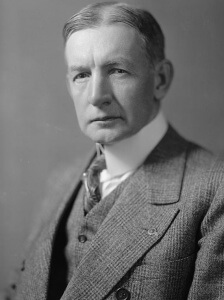
Charles G. Dawes served as Vice President of the United States under Calvin Coolidge during 1925-1929. At various times, he was a banker, a military general, and the co-winner of the 1925 Nobel Peace Prize (for his work on a post-World War I plan to help Germany stabilize its economy). If all that was not enough, he also co-wrote “It’s All in the Game,” the 1958 hit song recorded by Tommy Edwards.
Dawes’s Melody in A Major
Dawes wrote the music for what would become “It’s All in the Game” in 1911 while he was a banker. The amateur pianist and flautist then played his composition, “Melody in A Major,” for a musician friend who then took the sheet music to a publisher.
The tune became popular and was often played at appearances by Dawes. Below is a 1924 recording of “Melody in A Major,” featuring Carl Lamson on piano.
“It’s All in the Game”
Dawes, who was born in Marietta, Ohio on August 27, 1865 and passed away on April 23, 1951, just missed seeing his tune become a chart-topping pop standard. In the summer of 1951, not long after Dawes’s death, songwriter Carl Sigman took the melody that Dawes wrote and added lyrics to create “It’s All in the Game.”
Many a tear have to fall, But it’s all in the game; All in the wonderful game, That we know as love.
Tommy Edwards Versions in 1951 and 1958
A number of artists sang “It’s All in the Game,” including Dinah Shore and Louis Armstrong. The Virginia-born R&B singer Tommy Edwards had a popular version of the song first with his 1951 recording.
But seven years later, Edwards recorded it again in 1958 in a rock and roll version. This recording went on to top the charts, becoming the version most people recognize today.
First, here is Edwards’s 1951 version.
Now, listen to the differences between that 1951 version and Edwards’s 1958 recording of “It’s All in the Game.” The later recording illustrates the influence of rock and roll in the intervening years after Elvis Presley first recorded “That’s All Right” at Sun Studios in 1954.
Edwards also performed this version of “It’s All in the Game” on The Ed Sullivan Show on September 14, 1958 (only two years after Presley’s first appearance on the show). Below, though, is his hit recording.
Edwards had some other minor hit songs, but he never again matched the success of “It’s All in the Game.” Edwards died on October 22, 1969 at the age of 47.
The Songwriters
As for the songwriters, Sigman wrote lyrics for other popular songs, including “(Where Do I Begin?) Love Story” (the theme from the 1970 tear-jerker movie Love Story) and “Ebb Tide,” the 1965 Righteous Brothers hit.
Sigman passed away on September 26, 2000 in Manhasset, New York. He was 91.
The other songwriter who wrote the melody, as noted above, went on to become the only U.S. Vice President to co-author a hit song. On top of that, he also is the only Nobel Peace Prize winner with a hit song (so far).
While you may not remember much from school about Dawes’s political career or his Nobel Peace Prize or his years as U.S. Ambassador to the United Kingdom, you likely recognize his important work on a great song that was made an American classic with some help by Carl Sigman and Tommy Edwards.
“It’s All in the Game” continues to touch people, whether in the version by Edwards or by other artists like Nat King Cole, Cliff Richard, the Four Tops, Van Morrison, George Benson, Tom T. Hall, Ricky Nelson, or Michael Buble. So, while I am still waiting for that hit song from Dick Cheney or Joe Biden or Mike Pence, for now, Charles Dawes remains the only vice president to get so many greats to sing his tune.
Greg Trooper passed away on January 15, 2017 at the age of 61. Although he had been dealing with pancreatic cancer for some time, the singer-songwriter lived up to his last name, performing shows up until the end.
Chimesfreedom is a big fan of Trooper’s work, and we posted about his songs in the past. The recent sad news reminds us both how much we will miss Trooper and how much we enjoy his songs.
If you are unfamiliar with Trooper’s work, you cannot go wrong with any of his albums. He can break your heart with a love song, haunt you with a tale of murder, and give you new perspectives. With just a voice and a guitar, he created magic. Yet, he never received the acclaim and popularity he deserved.
Trooper, who was born on January 13 in 1956, brought a unique view, humor, and intelligence to his songs. He could make you laugh or cry, having earned his diverse take on the world. Trooper was born in New Jersey, but he later lived in Austin, New York City, Kansas, and Nashville before ending up in Brooklyn.
Rolling Stone‘s headline on its article about Trooper’s passing stressed Trooper’s work writing songs for artists like Vince Gill. But Trooper had a warm wonderful voice that made you think this was a guy you’d like to know (and by reports of those who knew him, he was a great guy to know).
Steve Earle once said he “coveted” Trooper’s voice. Trooper also could do a great cover, and he created one of my favorite Bob Dylan covers with “I’ll Keep It With Mine” off of his Popular Demons (1998) album. And he gave that voice to many characters throughout his own songs.
I first fell in love with Trooper’s work in 2001 when he released Straight Down Rain, although I would later go back and discover his earlier albums. He had me as a life-long fan the first time I heard “Sometimes It Takes a Hurricane,” a plea for social justice. “Sometime it takes no more than a drop of water/ Sometimes it takes a hurricane.”
Perhaps Trooper never received broader fame because he does not fit squarely into one genre. Some describe him as a singer-songwriter, some as a country singer, and some as a folk singer with a touch of Memphis soul. Others place him in the realm of Americana or alt-country.
The title song from his next album, Floating (2003), comes from the folk tradition of ageless murder ballads. It is a beautiful song that will haunt you long after you hear the final lines. In some ways, it was courageous for Trooper to sing an unusual song like this one.
Floating also contained one of Trooper’s most touching love songs that showed his love of Irish music, “Inisheer.” He named the song after one of the Aran Islands off the mainland of Ireland.
Chimesfreedom previously wrote about “Muhammad Ali (The Meaning of Christmas).” But it is worth posting again here as one of Trooper’s most beautiful songs. Other admirers of the wonderful song include Steve Earle (who covered Trooper’s song “Little Sister” for the U.K. B-side of Earle’s “Copperhead Road” single).
“I am the greatest,” he said with a grin; But he was talking about you, Not about him; And was teaching me The meaning of Christmas.
On “This I’d Do,” a song from Trooper’s 2005 album Make It Through This World, Trooper wrote a song where a lover makes promises. In doing so, he took a typical love-song scenario and made it seem both touching and new.
Finally, Trooper shows his sense of humor and love of Irish music with “Mary Of The Scots In Queens.” The song appeared on his final album of original songs, Incident on Willow Street (2013). It also features one of the funniest music videos you will see anywhere.
Those are a sampling of some of my favorite Greg Trooper songs. Again, you cannot go wrong with any of Trooper’s albums. But if one were looking for a place to start, one place would be his outstanding 2015 live album, Live at the Rock Room.
Our thoughts go out to his friends and family, including his wife Claire Mullally, who often sang with him. Trooper will be greatly missed by his fans, who included Billy Bragg, Emmylou Harris, Rosanne Cash, Ray Wylie Hubbard, John Fullbright, Allison Moorer, and me. But we will keep enjoying the music. RIP Mr. Trooper.
What are your favorite Greg Trooper songs? Leave your two cents in the comments.


 — on March 31, 2017.


 , although I would later go back and discover his earlier albums. He had me as a life-long fan the first time I heard “Sometimes It Takes a Hurricane,” a plea for social justice. “Sometime it takes no more than a drop of water/ Sometimes it takes a hurricane.”
 (2003), comes from the folk tradition of ageless murder ballads. It is a beautiful song that will haunt you long after you hear the final lines. In some ways, it was courageous for Trooper to sing an unusual song like this one.
 , Trooper wrote a song where a lover makes promises. In doing so, he took a typical love-song scenario and made it seem both touching and new.
 (2013). It also features one of the funniest music videos you will see anywhere.
 .
.