Singer-Songwriter Marty Brown supported his son Christian Brown as he auditioned on “American Idol,” singing one of his father’s songs.
We have posted a lot about country singer-songwriter Marty Brown over the years. We have noted that he has passed down his talents which he inherited from his parents to his children. In addition to Brown’s daughter Emma Grace Brown who has a great singing voice, his son Marty Brown Jr. released an excellent album with his band Maceo that we reviewed. And now, Marty’s son Christian Brown recently auditioned on American Idol.
Marty appeared on the episode with Christian, who sang one of our favorite Marty Brown songs, “Wildest Dreams.” As Christian explained, the song ,which appeared on the father’s debut album High and Dry in 1991, is about a parent’s love for their children. Still, it was a bold song choice, as judges usually prefer well-known popular songs. But Christian showed his authenticity in selecting a song written and recorded by his father decades ago.
Though maybe the song choice was not too much of a risk as it is a great song (not to mention he likely sang other songs not shown on the TV broadcast). Either way, it was worth it many viewers to hear the song for the first time while seeing Marty so proud of his son. The father’s pride choked me up a bit.
Did the judges vote to advance Christian to the next round? Check out the video below.
Update: For those of you wondering why you haven’t seen Christian Brown on later episodes of American Idol, Marty explained on his Facebook page that Christian had to withdraw from the competition. Christian Brown’s baby son had to undergo surgery, so his father decided to withdraw from the competition and its demanding schedule so he could be with his son while he recovers. We wish Christian’s son a speedy recovery and look forward to music from Christian in the near future.
Bruce Springsteen quickly responded to the killings by ICE in Minneapolis with the song, “Streets of Minneapolis.”
Like many Americans, Bruce Springsteen has been watching recent events and the deaths in Minnesota while people in Minneapolis continue to protest President Trump’s influx of ICE officers. In response, Springsteen very quickly wrote and recorded a song about the protests and the deaths of Renee Good and Alex Pretti.
Along with the song, Springsteen released the following statement:
I wrote this song on Saturday, recorded it yesterday and released it to you today in response to the state terror being visited on the city of Minneapolis. It’s dedicated to the people of Minneapolis, our innocent immigrant neighbors and in memory of Alex Pretti and Renee Good. Stay free, Bruce Springsteen
Of course, it is difficult to write a protest song so quickly and folks may debate whether they like the song as a song. And it is sure to draw the ire of Trump supporters. But either way one must hand it to an artist who recognizes their position and ability to put themselves out there for the less fortunate in spite of knowing many listeners will criticize him for taking a stand.
Oh our Minneapolis, I hear your voice, Singing through the bloody mist; We’ll take our stand for this land, And the stranger in our midst; Here in our home they killed and roamed, In the winter of ’26; We’ll remember the names of those who died, On the streets of Minneapolis.
Update: Below is the official video for “Streets of Minneapolis,” directed by Thom Zimny.
Springsteen is not the only songwriter paying attention to the events in Minneapolis. Billy Bragg also wrote a protest song called, “City of Heroes.“
Springsteen has often spoken out regarding Donald Trump. And “Streets of Minneapolis” is not Springsteen’s first statement on the ICE protests in Minnesota. Earlier in January at a concert, Springsteen dedicated a performance of “The Promised Land” to Renee Good, calling on ICE to leave Minneapolis: “If you believe you don’t deserve to be murdered for exercising your American right to protest; then send a message to this president.”
“Whole” appears as the final song on Sunny War’s album “Anarchist Gospel,” ending the album with some comfort for getting through difficult days.
The music of singer-songwriter Sunny War has been described as “folk-punk,” which captures her musical spirit as well as the depth of her songwriting. While she has been releasing music since 2014, in the early 2020’s she began attracting broader attention with her full-length albums.
In 2025, she released Armageddon in a Summer Dress, following the acclaim she received for her 2023 album, Anarchist Gospel. On that album, one of the highlights is her song, “Whole.”
On “Whole,” War offers some guidance on getting through rough days, offering a little comfort and hope.
Don’t you work yourself, yourself to death; Take a break from the man-made hell, To catch a breath today; Could be the last you know, happy’s how you oughta go; No pay could ever buy your soul, Ever make you whole.
While the album version of the song contains a full band, electric guitar, and backing vocals, the acoustic version she did for Western AF highlights here notable acoustic guitar skills. Check out Sunny War and “Whole.”
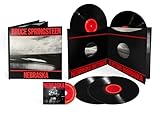
Some thoughts from one fan on the film “Springsteen: Deliver Me from Nowhere” and the new box set of music “Nebraska ’82: Expanded Edition.”
Bruce Springsteen’s 1982 album Nebraska has had a new moment in the sun with the release of a box album set Nebraska ’82: Expanded Edition as well as the release of the movie Springsteen: Deliver Me from Nowhere (2025). The film, about Springsteen’s personal turmoil during the making of the album, is based on the book Deliver Me from Nowhere: The Making of Bruce Springsteen’s Nebraska by Warren Zanes.
The film has received some good reviews and some mixed. But by most accounts it was a disappointment at the box office. There have been various explanations for the low attendance numbers. The explanations often center around the fact that the film does not have any major stars (despite a strong performance by Jeremy Allen White), it focuses on a narrow time period around one of Springsteen’s lesser-known albums, and the movie presents a depressing time in the artist’s life rather than a period of rousing successes. Some also have argued that Springsteen fans tend to be an older demographic, and that Springsteen has alienated some of his fans through his comments about Donald Trump.
I am a fan of Springsteen’s music. His work has been a major part of my life since before Nebraska was released. Since Nebraska, I’ve purchased every album he has released on the date each album was released. Further, from books and his interviews, I was familiar with much of the stories around his life. I also admire him for being open about his political beliefs even when it might have made economic sense for him to have been quiet while the movie was coming out.
So, if you are not a Springsteen fan, my opinion of the film may not connect with you. But for others who might be interested in the movie, should you see it — and if you are a fan of the album Nebraska, should you get the new box set? Here are 9 short thoughts from one Springsteen fan.
1. A fan may find it difficult to watch the portrayal of someone you “know” go through a dark period in their life struggling with depression. But if you have any interest in the man or the music, the movie gives you an interesting insight into the creative process and the turmoil of the man.
2. While one single moment does not break through in White’s performance, the movie’s portrayal of Springsteen’s depression reveals itself slowly, eventually making me feel on the verge of tears for much of the movie.
3. Don’t go to the movie looking for much about the E Street Band. Because the movie focuses on a period during the development of a solo album while Springsteen was not touring, there is not much interaction with the band. We do get to see Springsteen and the E Street Band in the studio working on some songs, including a successful recording of “Born in the USA.” Fans will recognize the portrayal of the various band members, but otherwise we do not get to see Springsteen hanging out with Clarence Clemons, Steven Van Zandt, or other band members. If you want more about Springsteen’s relationship with the band members during this period, check out Warren Zanes’ book.
4. The movie made me love Springsteen even more for his courage in participating in the book and the movie. The film shows him at a vulnerable time in his life where the portrayal is not always flattering. His willingness to show his struggles with depression is a gift for viewers.
5. The movie ends with a quiet personal triumph, but should it have been a larger triumph? Perhaps a different ending with him on stage during the subsequent Born in the USA tour performing an uplifting song like “No Surrender” would have made moviegoers happier as they left the theater, leading to bigger box office. Maybe it would have boosted box office. But I get that it might not have been as honest to the focus on Springsteen’s struggles, making it seem like all one needs to overcome depression is a hit song.
6. If you are a Springsteen fan, should you see the movie? Yes, of course, if you want more insight into a great artist. It may or may not be your cup of tea, but give it a shot.
7.If you are not a fan of Springsteen or his music, should you see the movie? Maybe, as long as you go into the movie realizing it is more about an artist’s struggle with depression than about an artist’s triumph or his hit songs. Again, if that sounds interesting, give it a shot and see what you think.
8. The music: Does the movie give fans more insight into the songs on Nebraska? Yes, although I knew much of the story, like how the movie Badlands influenced the writing of the song “Nebraska,” the movie gave me additional insight. The scene where Springsteen changes the lyrics to “Nebraska” from third person to first person was an insightful moment for me, reinforcing how these songs are personal to Springsteen. While many of his songs are obviously personal, you get a better sense of why he fought so hard for these songs to be released as he originally recorded them rather than re-record them with the band.
9. The music: If you already have Nebraska the album, should you buy the box set, which includes an album of outtakes, an album of band versions of the songs (“Electric Nebraska”), a recent live recording of the album, and the original album remastered? Many music critics have noted that nothing in the box set improves upon the original album. But the outtakes and the songs that make up what has been called “Electric Nebraska” add additional insight and many of them are fun to listen to. I am glad he released the album he did in 1982. And I have heard many of the electric versions of the songs in live versions. Yet, on the new set I still loved some of the other versions (like the band version of “Reason to Believe”) and was surprised by others.
If you like the album, the box set is worth it. Or you can just stream the music, but give it a listen.
One of the people we lost in a difficult year for many was Todd Snider, who here sings “Long Year.”
As the year comes to a close and our planet completes another trip around the sun, humans reflect on the time that has passed. For many, this year has been particularly rough.
One of the many losses this year was the death of singer-songwriter Todd Snider, who may best sum up the year in his song, “Long Year.” In the video below, he recently re-recorded the song as part of a project of making new acoustic performances of his back catalog available for free to his fans.
Here is wishing you a happy new year and a better world.
It’s been a long long long year It’s been a long long long year How did I get here?