9 Thoughts on the “Deliver Me from Nowhere” Movie and Springsteen’s “Nebraska” Box Set

Some thoughts from one fan on the film “Springsteen: Deliver Me from Nowhere” and the new box set of music “Nebraska ’82: Expanded Edition.”

Bruce Springsteen’s 1982 album Nebraska has had a new moment in the sun with the release of a box album set Nebraska ’82: Expanded Edition as well as the release of the movie Springsteen: Deliver Me from Nowhere (2025). The film, about Springsteen’s personal turmoil during the making of the album, is based on the book Deliver Me from Nowhere: The Making of Bruce Springsteen’s Nebraska by Warren Haynes.

The film has received some good reviews and some mixed. But by most accounts it was a disappointment at the box office. There have been various explanations for the low attendance numbers. The explanations often center around the fact that the film does not have any major stars (despite a strong performance by Jeremy Allen White), it focuses on a narrow time period around one of Springsteen’s lesser-known albums, and the movie presents a depressing time in the artist’s life rather than a period of rousing successes. Some also have argued that Springsteen fans tend to be an older demographic, and that Springsteen has alienated some of his fans through his comments about Donald Trump.

I am a fan of Springsteen’s music. His work has been a major part of my life since before Nebraska was released. Since Nebraska, I’ve purchased every album he has released on the date each album was released. Further, from books and his interviews, I was familiar with much of the stories around his life. I also admire him for being open about his political beliefs even when it might have made economic sense for him to have been quiet while the movie was coming out.

So, if you are not a Springsteen fan, my opinion of the film may not connect with you. But for others who might be interested in the movie, should you see it — and if you are a fan of the album Nebraska, should you get the new box set? Here are 9 short thoughts from one Springsteen fan.

1. A fan may find it difficult to watch the portrayal of someone you “know” go through a dark period in their life struggling with depression. But if you have any interest in the man or the music, the movie gives you an interesting insight into the creative process and the turmoil of the man.

2. While one single moment does not break through in White’s performance, the movie’s portrayal of Springsteen’s depression reveals itself slowly, eventually making me feel on the verge of tears for much of the movie.

3. Don’t go to the movie looking for much about the E Street Band. Because the movie focuses on a period during the development of a solo album while Springsteen was not touring, there is not much interaction with the band. We do get to see Springsteen and the E Street Band in the studio working on some songs, including a successful recording of “Born in the USA.” Fans will recognize the portrayal of the various band members, but otherwise we do not get to see Springsteen hanging out with Clarence Clemons, Steven Van Zandt, or other band members. If you want more about Springsteen’s relationship with the band members during this period, check out Warren Haynes’s book.

4. The movie made me love Springsteen even more for his courage in participating in the book and the movie. The film shows him at a vulnerable time in his life where the portrayal is not always flattering. His willingness to show his struggles with depression is a gift for viewers.

5. The movie ends with a quiet personal triumph, but should it have been a larger triumph? Perhaps a different ending with him on stage during the subsequent Born in the USA tour performing an uplifting song like “No Surrender” would have made moviegoers happier as they left the theater, leading to bigger box office. Maybe it would have boosted box office. But I get that it might not have been as honest to the focus on Springsteen’s struggles, making it seem like all one needs to overcome depression is a hit song.

6. If you are a Springsteen fan, should you see the movie? Yes, of course, if you want more insight into a great artist.

7.If you are not a fan of Springsteen or his music, should you see the movie? Maybe, as long as you go into the movie realizing it is more about an artist’s struggle with depression than about an artist’s triumph or his hit songs.

8. The music: Does the movie give fans more insight into the songs on Nebraska? Yes, although I knew much of the story, like how the movie Badlands influenced the writing of the song “Nebraska,” the movie gave me additional insight. The scene where Springsteen changes the lyrics to “Nebraska” from third person to first person was an insightful moment for me, reinforcing how these songs are personal to Springsteen. While many of his songs are obviously personal, you get a better sense of why he fought so hard for these songs to be released as he originally recorded them rather than re-record them with the band.

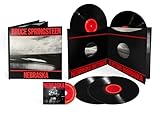
9. The music: If you already have Nebraska the album, should you buy the box set, which includes an album of outtakes, an album of band versions of the songs (“Electric Nebraska”), a recent live recording of the album, and the original album remastered? Many music critics have noted that nothing in the box set improves upon the original album. But the outtakes and the songs that make up what has been called “Electric Nebraska” add additional insight and many of them are fun to listen to. I am glad he released the album he did in 1982. And I have heard many of the electric versions of the songs in live versions. Yet, on the new set I still loved some of the other versions (like the band version of “Reason to Believe”) and was surprised by others.

If you like the album, the box set is worth it. Or you can just stream the music, but give it a listen.

Leave your two cents in the comments.
Elvis Presley’s Funny Take on “Are You Lonesome Tonight” in Omaha in 1977

In 1977, near the end of his life and in poor health, Elvis Presley had a laugh with Charlie Hodge during “Are You Lonesome Tonight?”

Elvis Lauging

There are a number of instances of Elvis Presley cracking up while performing the monologue in “Are You Lonesome Tonight.” For example, on August 26, 1969 in Las Vegas, Elvis could not keep it straight as the soprano backing vocals from Cissy Houston (Whitney’s mom) made him start laughing. Another gem occurred near the end of his life while performing in 1977, apparently in Omaha on June 19, 1977.

The Omaha performance was filmed for a CBS TV Special. Reporters noted that the the ailing and puffy-looking Presley gave a subdued performance that lacked the enthusiasm of his earlier shows. But there were still flashes of energy and the King’s charm.

In the clip below, Charlie Hodge comes out to hold the microphone while Elvis plays guitar and sings “Are You Lonesome Tonight.” Hodge often held the microphone for the King, but the proximity of the men during the touching song and the spoken-word segment leads them both to cracking up.

One may point out that it is near the end of Elvis’s life when he appeared not to be in good health. In fact, in a little more than two months, the King would be dead. But still, especially considering his condition during this period, his charisma and voice comes through to make an entertaining performance.

As for the man holding the microphone, Charlie Hodge was a man of many talents beyond holding a microphone. He was a singer, musician, arranger, and close confidant of Presley. As a member of Elvis’s “Memphis Mafia,” he helped Elvis in a number of ways, including with music arranging. As you can tell from the video, the two men were very close, with Hodge living at Graceland for seventeen years. After Elvis’s death, Hodge continued to help promote the legacy of the King.

Leave your two cents in the comments.

  • Was Kurt Russell’s Voice in “Forrest Gump” as Elvis Presley?
  • 9 Thoughts on the “Deliver Me from Nowhere” Movie and Springsteen’s “Nebraska” Box Set
  • Longing for the Freedom of My Chains: Dobie Gray’s “Loving Arms”
  • Chuck Jackson Was There Before Elvis: “Any Day Now”
  • Lisa Marie Presley and Elvis: “I Love You Because”
  • Townes Van Zandt Covered an Elvis Song About a Shrimp?
  • ( Some related Chimesfreedom posts.)

    Where is Bruce Springsteen on the Cover of “Western Stars”?

    Bruce Springsteen’s face appears on the overwhelming majority of the covers of his twenty-five regular and live albums. But his album Western Stars may be his most unusual album cover of a long career.

    One writer who discussed Springsteen’s past covers once noted that “more than anything, Springsteen’s biggest problem is that he’s a little too in love with his own face.” NPR, meanwhile, once labeled his album covers “ugly.”

    While you might have to squint to see him on some albums, like Live in Dublin and Springsteen on Broadway, Springsteen appears on the cover of every one of his albums since his 1972 debut Greetings from Asbury Park, NJ in some form. One might discount the choice for that first album as being before a vision of a career of album covers.

    The two major exceptions prior to Western Stars, then, to Springsteen album covers are 1982’s Nebraska and 1995’s The Ghost of Tom Joad.   The latter features a painting by Eric Dinyer.  Dinyer may have have done the painting of a homeless man on the sidewalk before approached about the album (although some may have speculated the painting was meant to represent Springsteen).  And now Western Stars, Springsteen’s first album with an animal on the cover.

    Much has been written about he lush arrangements on Western Stars and the fact that Springsteen has noted the influence of 1970s California pop and songwriters like Jimmy Webb and Burt Bacharach.  So it is worth asking why would Springsteen’s most operatic album be grouped with his two most instrumentally stark albums?

    Maybe it is mere coincidence that Springsteen chose to omit his face from Western Stars and those other albums.  But an artistic genius like Springsteen more likely thinks these things through.  One things that connects the albums is that they all technically are solo outings without the E Street Band.  But Springsteen has used his likeness on other albums without the band.

    Although Western Stars differs in sound from the sparse instrumentation of Nebraska and the less melodic The Ghost of Tom Joad, the three albums are really about the same things.  These albums rely heavily on characters facing hard times and/or personal crises.

    It is true that different characters — and even Western characters — appear on other Springsteen albums (“Outlaw Pete,” “Reno,” etc.).  But these three albums represent a complete immersion into telling the stories of struggling people, largely against the backdrop of the Western United States.  That does not mean the albums are not as personal as songs that might seem more in the voice of the rock singer, like “Born to Run.”  Springsteen is still here.  But he is taking us somewhere into the souls of other people, teaching us empathy as we go.

    Ann Powers at NPR wrote one of the most insightful articles about the new album. In the article, she argues that Springsteen’s songs on Western Stars connect to questions from popular culture in the 1960s and 1970s as in the movie Easy Rider, “Who gets hurt when people, especially men, try to be free?”  She recounts how Springsteen uses characters in unstable professions to delve into the problems of modern masculinity:  “The men who populate Western Stars have sought freedom and know its edges in an unfree world.”

    Western Stars opens with a traveling hitchhiker narrator in the first song and then goes into another song about a traveler, “The Wayfarer.”  Another song is in the voice of a stuntman (“Drive Fast (The Stuntman),” another in the voice of a songwriter (“Somewhere North of Nashville”), a crane operator (“Tucson Train”), someone who worked in movies (“Western Star”) and so on.

    One may wonder too why Springsteen, who has been prone to comment on current events with his albums, appears to leave politics alone on this album.  Whereas Magic reflected on the Bush years and Working on a Dream was a commentary on the Obama election, one may only speculate where Trump is in all of this.  One explanation is that Springsteen has been working on this album for a long time.  But another explanation is that there is some politics here, with Springsteen mining the minds of Americans feeling excluded from the American Dream.

    As for more about the album, songs like “There Goes My Miracle” immediately grabbed me as if I had heard the song my entire life.  “Tucson Train” is the most joyous on the album.  And the lyrics to songs like “Western Stars” and “Chasin’ Wild Horses” are gut-punchers.  For more about the album, Backstreets has an insightful review.

    So, returning to our original question, why is Springsteen absent from the cover of Western Stars? It is a good question that makes one delve into the questions Springsteen ponders on this album about the West and displaced men.  Discuss among yourselves.

    Leave your two cents in the comments.
    Buy from Amazon

  • 9 Thoughts on the “Deliver Me from Nowhere” Movie and Springsteen’s “Nebraska” Box Set
  • “Under a Big Sky”: Digesting Songs on Springsteen’s “Tracks II: The Lost Albums”
  • Bruce Springsteen’s New Song: “Tucson Train”
  • Bruce Springsteen: “Hello Sunshine”
  • “Nebraska” and the Death Penalty
  • Pres. Obama: Born in the USA
  • ( Some related Chimesfreedom posts.)

    “Nebraska” and the Death Penalty

    Nebraska Death Penalty The Nebraska unicameral legislature in 2015 voted to abolish the death penalty, following a number of states that have come to realize that capital punishment is ineffective and a waste of resources. Although Governor Pete Ricketts vetoed the action, the legislature overrode his veto, making Nebraska the eighteenth state (in addition to the District of Columbia) that does not sentence human beings to death. According to a recent book on the history of the death penalty, states that have stopped sentencing people to death in recent years also include Connecticut, Illinois, New Jersey, New Mexico, New York, and Maryland.

    One of the great songs about the death penalty is Bruce Springsteen’s “Nebraska,” which Springsteen based on Terrence Malick’s movie Badlands.  And that movie was loosely based on the real-life case involving Charles Starkweather and Caril Ann Fugate.

    The song, in the voice of the condemned, offers no straightforward judgement on the death penalty.  Springsteen would address the topic again years later in his song “Dead Man Walking.”

    But by taking the voice of the condemned man in “Nebraska,” Springsteen challenges the listener to find some humanity in the narrator. By the time the singer/condemned tries to explain why he did the horrific things he did, all he can come up with is “I guess there is just a meanness in this world.” Taken on its face, one might find little sympathy for the killer. But the way Springsteen sings the words, you believe that the condemned is not a personification of evil.  Instead, he comes across as someone unable to understand the world because he has been on the other end of that meanness his whole life too.

    Thus, it is not surprising that in the real world, Bruce Springsteen is opposed to capital punishment. Below, following an introduction about how the album Nebraska focuses on the downtrodden, Springsteen performs the song “Nebraska” on a 12-string guitar with harmonica from a benefit show in Los Angeles in November 1990.

    The real Starkweather grew up with a birth defect and a speech impediment, and he was a slow learner. Nebraska executed Charles Starkweather in the electric chair, just like in Springsteen’s song.  Starkweather died on June 25, 1959 at the age of 20.

    The young teenaged girl who went with him on the murder spree did not die in his lap.  She was eventually paroled in 1976 and lives in Michigan, which is the first state in the United States to abolish capital punishment.

    Check out our posts on other songs about capital punishment.

    Leave your two cents in the comments.

    Buy from Amazon

  • Dylan’s “Julius & Ethel”
  • The Journey of “Hang Me, Oh Hang Me” From the Scaffold to the Screen
  • The End of Maryland’s Death Penalty and “Green, Green Grass of Home”
  • The Killing of “Two Good Men”
  • Bono and Glen Hansard: The Auld Triangle
  • Connecticut’s Hangman and Johnny Cash’s Last Song
  • (Some related Chimesfreedom posts.)

    Tommy Lee Jones and “The Homesman” (Missed Movies)

    Tommy Lee Jones The odds are pretty good that you might have missed even hearing about a movie last year directed by and starring Tommy Lee Jones that also featured Hillary Swank, Meryl Streep, John Lithgow, James Spader, Tim Blake Nelson, Hailee Steinfeld, and several other stellar actors. But through the miracle of DVDs, you may now catch up on the odd but fascinating movie The Homesman (2014).

    The movie is based on a book by Glendon Swarthout, who wrote several books that have been made into movies, including Bless the Beasts and the Children and The Shootist. Although the actors and crew argue about whether or not The Homesman is a Western, the film is set in the 1850s of what was the West at the time, the Nebraska Territory (although much of it is filmed in northern New Mexico). And, like many Westerns, the film features beautiful images of the open landscape with wonderful cinematography (by Rodrigo Prieto).

    Much of The Homesman centers on Mary Bee Cuddy (Swank), a resourceful, intelligent, and lonely woman living on the frontier. In several disturbing scenes, the movie shows us how harsh conditions and tragedies affect the mental health of three women who live near Cuddy. As a result of their deterioration, the townspeople select Cuddy to take the mentally ill women back to civilization. As she prepares for her journey, Cuddy encounters George Briggs, who through some odd circumstances she recruits as the “homesman” of the title, a term for someone who takes immigrants back home.

    Threads of mental illness, loneliness, and the harsh landscape run throughout the movie, which features haunting images throughout. Few movies present such scenes of oddness that touch on the fact that the Old West must have contained many disturbed characters, although we see flashes of it in somewhat odd movies like Missouri Breaks (1976) (with Marlon Brando in an odd portrayal of a character talking to his horse) and Dwight Yoakam’s interesting but messy South of Heaven, West of Hell (2000). Similarly, there is a standout strange scene in Dances With Wolves where Costner encounters a soldier driven crazy by his time on the frontier.

    Homesman is made up of many such images but ties them together in a fascinating story that seems real and honest. None of the characters are perfect and they all have their own demons and weaknesses. Because of that, the movie strays from the traditional Western format that focuses on heroes who save the day. The movie is not predictable, and while not perfect, you will not soon forget it. Tommy Lee Jones continues to show a unique directing eye as he did in The Three Burials of Melquiades Estrada (2005) and The Sunset Limited (2011).

    Conclusion? If you have a taste for an unpredictable honest raw movie about unusual but real characters, and if you enjoy beautiful shots of the desolate Western United States, you might enjoy The Homesman. While it is not a great classic, it is a memorable unusual film that generally received good reviews and is worth your time.

    {Missed Movies is our continuing series on good films you might have missed because they did not receive the recognition they deserved when released.}

    What did you think of Homesman? Leave your two cents in the comments.

  • Stephen King’s “The Life of Chuck”: A Few Thoughts for Those Who Haven’t Seen the Film . . . and a Few for Those Who Have
  • Nicolas Cage Shines In Modest But Surprising “Pig” (Short Review)
  • “Lincoln” As Both Icon and Human Being (Short Review)
  • Missed Movies Roundup: Contrasting East vs. West Edition
  • Missed Movies: Project Nim (short review)
  • 9 Thoughts on the “Deliver Me from Nowhere” Movie and Springsteen’s “Nebraska” Box Set
  • (Some related Chimesfreedom posts.)